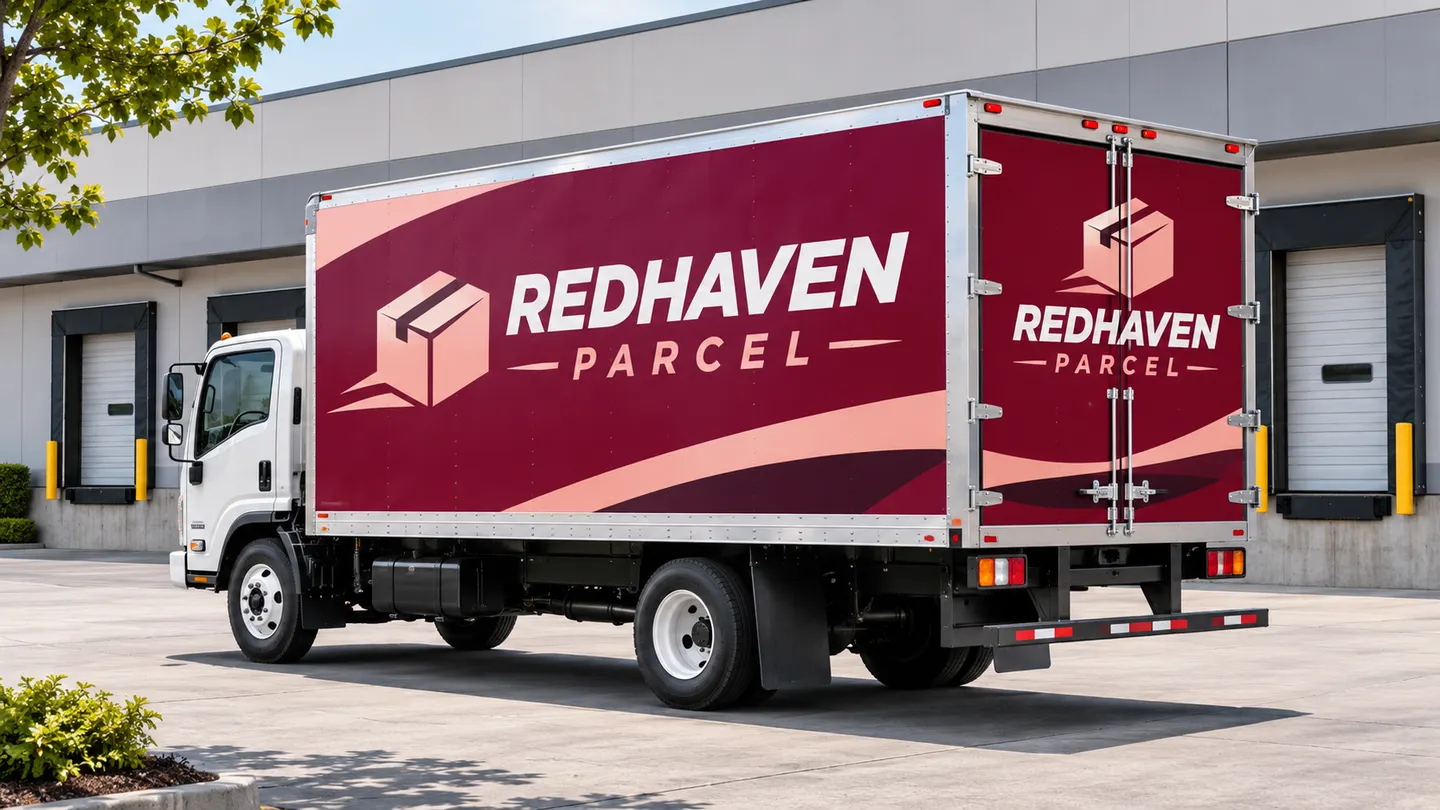
Give reviewers the same reference
Share the primary message and approved wording with each reviewer. Identify the actual body configuration and covered surfaces. Without those references, one person may evaluate a sales message while another judges whether the truck resembles an unrelated inspiration image.
Ask reviewers to describe what they understand from the side and rear separately. Use that feedback to find unclear wording or competing priorities. Keep their observations as design input rather than presenting a small informal review as scientific evidence that a wrap will attract a measured number of customers.
- Provide one current proof to all reviewers.
- Separate factual corrections from preferences.
- Ask what each view communicates on its own.
Check the design against the working body
Use labeled photos to review hardware, door seams and ordinary equipment. Confirm whether any critical text is split or covered in normal operation. Inspect the proposed layout at a reduced size as well as close up, since full-screen artwork can hide hierarchy problems.
Review both sides rather than assuming they are perfect mirror images. The rear needs an independent approval, and any required operational markings need an assigned responsible person. Record where the designer should make a revision and which approved content must remain unchanged.
- Check small-scale hierarchy and full-size details.
- Review each side and rear independently.
- Record the body feature behind each requested change.
Close the review with a release record
Combine accepted feedback into a single instruction set and ask for an updated proof. Identify the version authorized for production after corrections are checked. Avoid leaving several annotated files labeled final in circulation without a clear replacement relationship.
Save the approval with scope, construction and vehicle references. Manufacturer technical information remains the source for exact-product application requirements, while the buyer’s record documents the intended message. At handoff, use the approved views to review the delivered wording and any agreed exceptions.
- Resolve conflicting feedback before release.
- Name the effective proof revision.
- Keep the final approval available at delivery.
Keep a working record
Before you approve the next step
- Circulate one current artwork revision.
- Provide the message and wording record.
- Review side and rear views independently.
- Check equipment, seams and coverage.
- Consolidate feedback before requesting changes.
- Record the exact production release.
Use the free planning tool to organize the details you can confirm and the questions still open.
Four questions before the next step
Should every reviewer choose colors and layout?
Define review roles. Someone should verify factual wording while the authorized design approver resolves hierarchy and appearance. This keeps conflicting comments from becoming contradictory production instructions.
Read the detailed guide: Test the box truck message before production
What if someone changes wording after release?
Identify the new request and affected revision immediately. Ask the supplier what has already been produced and agree on any revised work before it proceeds.
Read the detailed guide: Test the box truck message before production
Should a large side list every service?
Include the information needed for the chosen communication goal. A longer list can compete with the identity and contact route, so ask the designer to show a clear hierarchy.
Read the detailed guide: Plan a box truck side message with one clear priority
Can the message board predict reading distance?
No. It organizes your proposed wording and view priorities. The design and actual viewing conditions still need review without treating the worksheet as a visibility certification.
Read the detailed guide: Plan a box truck side message with one clear priority
Original technical sources
Use the linked publisher's current instructions for the exact product and vehicle. This planning guide does not replace its application, safety or warranty requirements.